Featured

Set For Variability

You may have been hearing the term set for variability being used lately. It is a term often talked about within the science of reading movement. Research discussing Set for variability has been out for a while.

Set for variability refers to the ability to take an approximation error of a word and fix it into the correct word. Some are now labeling it as a strategy to help solve irregular words. It is more of a process readers must be able to perform. For Set for variability to be successful, a child must have phonemic awareness, and letter-sound knowledge, be able to decode and blend, and have a representation of the target word in her oral vocabulary (see Elbro, de Jong, Houter, D., & Nielsen, 2012). 

It also requires self-monitoring skills. Readers must be willing to do some self-teaching and take a leap, trying out the word in a slightly different way.

It involves the manipulation of sounds, adjusting the mispronunciation into a word they have heard that makes sense of the sentence. Notice how making meaning never goes away. Our brains naturally try to find meaning. 

Be aware that too much phonics and exposure to 100% decodable books will not allow students to use the process of Set for variability. Readers have to be exposed to words they cannot sound out early on. Not just High-Frequency words either. They must learn to play around with sounds in words and change mispronunciations into meaningful words. 

Here are a few helpful ideas to set your students up to learn this process.

As teachers, we have to coach kids into listening and switching the sound they say to something that gives the word meaning and sounds like a word they know and have heard

  • We can use phrases like “What else could it be” (Marnie Ginsberg)
  • Try it again
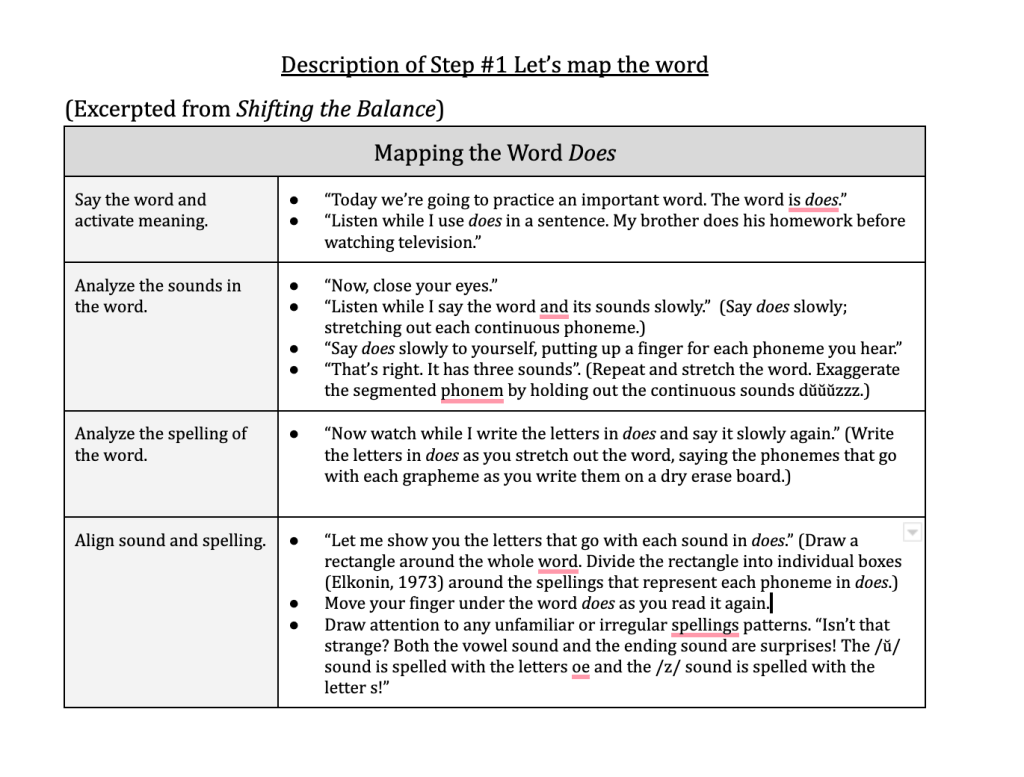
  • In their book Shifting the Balance, Burkins & Yates created a charge to help us teach kids to be flexible. I have provided a snapshot of it.
  • Help students use it with irregularly spelled High-Frequency words.

Words like: what, saw, was 

        I see 1st-grade readers try sounding out the word “what” all the time and then self-correcting after a brief pause, an example of students using Set for variability.  

        I recently worked with a struggling 3rd grader who got stuck on the word “tube.” First, he decoded it perfectly, but with a short sound. I asked him to try again and pointed to the e. He perfectly sounded it out again with the u saying its name. The long u sound is tricky, however, and it often does not perfectly say its name. I had to help him work through this. He was frustrated because he was following the rules he had been taught, and it was not working. I helped him use meaning and structure to make a leap to the correctly pronounced word.

A short a sound is often tricky for kids first learning short vowels. Think about the words am, ran, etc. The short a sound is not always pure.

So, teach students to first read with their eyes and say all the sounds in the word. If incorrect and their decoding attempt was phonetically accurate, have them use the sense-making processes we are more familiar with. They can cross-check the approximation they said with known words and for meaning.

Troy

Featured

What is Reading Comprehension?

Subscribe to continue reading

Subscribe to get access to the rest of this post and other subscriber-only content.

These ideas are from Pernille Ripp

1. Ditch the Teacher-Only Feedback Model

We shouldn’t be the only ones giving feedback. In fact, we might be the worst at it—too rushed, too generic, too focused on what we think matters instead of what they care about.

💡 New idea: What if students got more feedback from peers, younger students, real-world audiences, and even AI tools—and less from us?

👉 Try this:

  • Have students share their writing with a younger class. It’s wild how quickly they’ll simplify, clarify, and revise when they realize a first grader is their audience. I have done this for years with speeches and even our nonfiction picture book unit, it alters the entire process.
  • Use AI to generate feedback alongside human feedback—then have students compare. What’s useful? What’s missing?
  • Create a “feedback portfolio” where students collect and analyze all feedback received (not just yours) and decide what’s worth acting on.

2. Scrap the Grade—But Not for the Reason You Think

We talk about “going gradeless” to reduce stress, and to make learning more meaningful, but removing grades doesn’t matter if students still see feedback as punishment.

💡 New idea: It’s not about eliminating grades—it’s about making assessments feel like coaching instead of judgment.

👉 Try this: Instead of “no grades,” try collaborative grading. Sit down with a student and decide their grade together based on evidence of growth. Let them argue their case. Shift the power.

I have done this for many years, not just with student self-assessments but also their report cards. The conversations you end up having as a way to figure out where to land offer immeasurable insight into how kids see themselves as learners.

3. Let Students Give YOU Feedback First

What if every piece of feedback we gave students had to start with them giving us feedback first?

💡 New idea: Before turning in a project, students answer:

  • “What’s the best part of this work?”
  • “Where did I struggle?”
  • “What specific feedback do I want from you?”

👉 Try this: Make a rule: no teacher feedback without student reflection first. If they can’t identify a strength and a challenge, they’re not ready for feedback yet.

4. The One-Word Feedback Challenge

Ever spend time crafting detailed feedback, only to have students glance at the grade and move on?

💡 New idea: What if our feedback had to fit in one word? Instead of writing long paragraphs that students ignore, we give a single word that sparks curiosity: Tension. Clarity. Depth. Risk. Precision.

👉 Try this: Give students one-word feedback and make them consider what it means. Have them write a short reflection: Why did my teacher choose this word? How does it apply to my work? This forces them to engage with feedback before receiving explanations.

Feedback shouldn’t feel like a dead-end—it should be a conversation. When we shift the balance, when students take ownership, feedback stops being something they receive and starts being something they use. And isn’t that the whole point?

I want to start to explore feedback. Maybe you will join me.

Staying Current with Great Literature

I need to make a considered effort to stay current on all the new and wonderful children’s literature being released. It can be hard when you have many things to complete each day, week, month, and year as an educator, and then you need to find time to relax and take care of your family and friends.

I am lucky because I find reading and losing myself in a book relaxing and invigorating.

If you can find the time, many awesome books are out there. You can do a search and find many books on Juneteenth. How exciting is this for our young kids and adults! Juneteenth

Places like GoodReads and other book recommendation sites are very helpful for this.

We also have people like Colby Sharp who share great books they use in their classrooms. Checkout his YouTube channel. Colby Sharp

Checkout his list of great 2024 books: https://www.mrcolbysharp.com/2024

The International Literacy Association (ILA) announced their winners of the ILA 2024 Children’s and Young Adult Book Awards, a program that highlights new authors who have published only their first or second book and already show exceptional promise in the literary world.

This year’s winners are as follows:

  • Winner: Ruth Whiting for Lonely Bird (Candlewick)
  • Honor: Kevin Johnson for Cape (Macmillan)
  • Winner: Jessica Lanan for Jumper: A Day in the Life of a Backyard Jumping Spider (Macmillan)
  • Honor: Shannon Earle for The Penguin of Ilha Grande: From Animal Rescue to Extraordinary Friendship (Charlesbridge)
  • Winner: Zach Weinersmith for Bea Wolf (Macmillan)
  • Honor: Malia Maunakea for Lei and the Fire Goddess (Penguin)
  • Winner: Willie Mae Brown for My Selma: True Stories of a Southern Childhood at the Height of the Civil Rights Movement (Macmillan)
  • Honor: Katharina Weiss-Tuider for Mission: Arctic: A Scientific Adventure to a Changing North Pole (Greystone Kids)
  • Winner: Angeline Boulley for Warrior Girl Unearthed (Macmillan)
  • Honor: Ari Tison for Saints of the Household (Macmillan)
  • Winner: Sarah Myer for Monstrous: A Transracial Adoption Story (Macmillan)
  • Honor: Monica Edinger and Lesley Younge for Nearer My Freedom: The Interesting Life of Olaudah Equiano by Himself (Lerner)

More information about this year’s selections can be found in ILA’s Literacy Now blog coverage.

Congratulations to the winning authors!

Blending Practice

Once students learn letter sounds, they need lots of practice blending words together. There are a few different ways you can give this practice.

There are two main things that can make blending difficult for some children: auditory processing weakness and short-term memory weakness. You must ensure students are automatic with letter sounds as well. Often, times students are not automatic enough with some sounds, and it slows them down, and they are not hearing the blended word. You should not be discouraged from working with students on blending if they do not know all letters and sounds, however. It is our job to know the letters and sounds we have taught and that each student has internalized. Hold students accountable for what they know. Work with those sounds when practicing blending, while pushing them forward.

When working with readers on blending, you need to keep a few things in mind. Recognize that some sounds are continuous sounds while others are stop sounds. When students recognize this after modeling and discussion, it helps them fluently blend words.

When introducing CVC words to beginning readers, make sure to do so by modeling how to say the words without completely stopping between sounds. We have to make certain that our kids understand that the individual sounds in words blend together. This is also where Set For Variability comes into play. I discussed this in my last blog post.

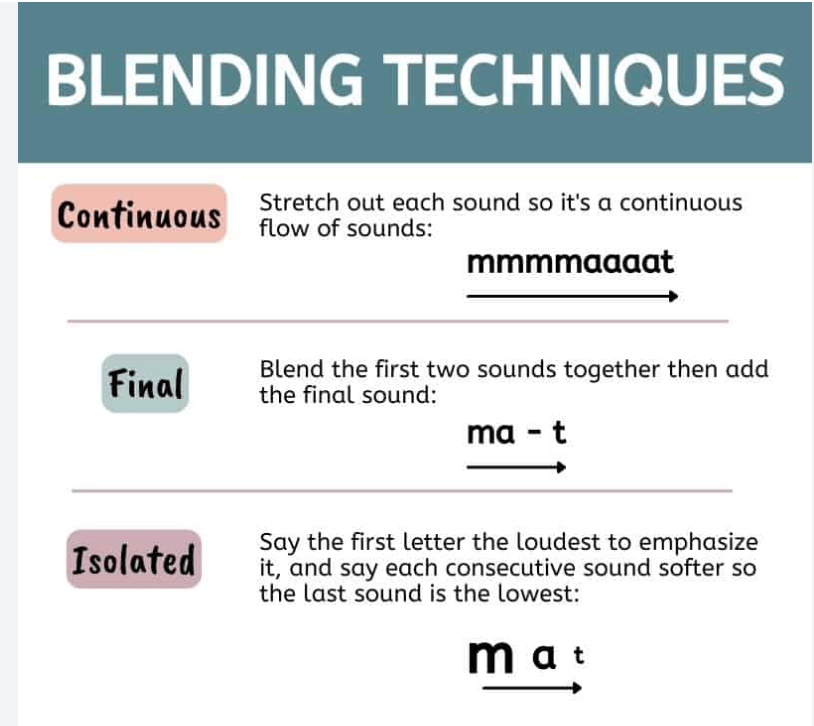
One strategy that I have found helpful when a student is struggling with blending is teaching them to blend the first two sounds in a word together. This works with CVC words and words with blends and digraphs. The kids who have processing issues often mix up the last sound. Blending the first two sounds together helps alleviate some of the cognitive load. It also activates their word knowledge causing the brain to start making connections with possible words students have in their oral vocabulary and or reading and writing memories.

This can also make easier transitions when working with word chunks and words that rhyme. Our brain is always trying to make meaning and does so when learning to read by recognizing meaningful letter strings and chunks contained in words that can help us understand their meanings.

I have linked a blog post from Burkins & Yates discussing some other great things to keep in mind when teaching blending.

Enjoy, they offer some great ideas!

Troy

Knowledge Is Comprehension in Disguise

Think about content goals as well as literacy skills, goals, and objectives. You should have a content goal for students to engage them in the text. Also, have literacy skill goals and objectives you can pull from your district and state standards.

The content goals will help hook the students into reading. You must give them a reason to read. 

        For example, consider this content goal or reason to read for students in a well-known text like Chicken Little.

Content Goal: Read to find out a mistake Chicken Little makes. This mistake led her to mislead others into believing something that was not true. Let’s read to figure out what her mistake is. Maybe we can learn from her mistake to help us live better lives.

Then, you can also have a literacy goal or objective that ties into your district curriculum and state standards. But it would be best to keep the text at the center of comprehension work. Use the text to plan your lesson to develop the processes, skills, and knowledge necessary to work with texts and readers. It is not isolated skill work.  Consider how the literacy skill, strategy, or objective can support the student in bringing their knowledge to the forefront.

Susan Neuman once said knowledge is comprehension in disguise. We must help students build knowledge, not just skills, to comprehend texts. Oral language that students hear, speak, and interpret becomes the words of the texts they are asked to read. Oral language comprehension must be happening for it to be translated into print. Comprehension depends on what kids bring to the text and how we continue to develop our language competencies. 

Kids must use multiple language and cognitive processes to comprehend what they read. They must:

  • Process the language of the text
  • Have word recognition and utilize decoding skills
  • Understand the meaning of the words, working out the syntactic sense of the sentences(sentence comprehension)
  • Understand the vocabulary and learn new language as they read
  • Integrate the meaning of multiple sentences as they read. (which requires some inferring).
  • Incorporate background knowledge and apply it in specific ways
  • Understand what is not specifically stated, along with literal knowledge

We have to help students integrate and elaborate on what they are reading with the lives they lead within and outside of school. 

What is Reading Comprehension Part 2

When it comes to helping our students develop comprehension as they read, we need to remember that, as teachers, we can have a separate or slightly different routine or strategy than the students. We often get caught up in oversimplifying instruction for students and mix strategies that need to be for us as teachers and strategies kids might need to use to help them when understanding breaks down.
For students, the focus should always be on learning something new, building knowledge, learning about life, and growing as humans. This will keep them more engaged. We should have kids focusing less on standards and strategies that are for us as teachers to help us teach.
We need kids to be engaged in the lessons and what they are reading, not the standards. We need to give them a goal for reading. It can be a content goal focused on learning something about the topic they are reading or learning more about life and how to handle different situations that might arise from characters of fiction. We can then have our own goals focused on standards and a strategy or strategies to support students as understanding breaks down. Kids are not excited about standards and strategies. Students find these boring and need to be more engaged. When we get them excited about learning a topic or life skills when reading about interesting fictional or real-life characters, we will see higher engagement. We can then bring in the strategies, check in with students, and see if they are meeting the standards we need to use to help us focus our instruction.
We can continue to think about comprehension as a process to help us do this. Think of it as an assembly line making a product in a factory. Multiple processes and steps have to happen to get to the finished product. The product is text understanding that can be applied and transferred to multiple situations. Getting students to explain the main idea is a product. Understanding text structures is a process that can be used to help readers get there. Thinking about the author’s purpose is also a process that can help. They are not the final product. The main idea is a product, but it can also be combined with other texts and applied in different situations that can further our learning and understanding.


As teachers, we must consider which of these many processes our students might struggle with. This will help us consider what we have to focus on to plan for instruction. This includes instruction as you confer individually with students within the reader’s workshop or at the guided reading table, not just whole group lessons. Consider what fixup strategies you can give the reader to help them understand what they are reading. Consider how you can help them access their background knowledge. Consider how you might help them build new knowledge. It takes integration and elaboration.
When students are having difficulty with a product, it is usually because of a breakdown in a process. It is not the product itself that is faulty.
In future posts, we will dig into some of the processes that could be causing a breakdown. Realize that utilizing background knowledge, which includes content knowledge, we expect students to have as they move through grade levels. You have to consider what the student is bringing and what the text is demanding.

Consider this:

We do not want to be choosing texts for kids to practice a strategy. We want students to choose texts they find interesting to grow their knowledge of a topic or to learn more about life through characters they enjoy. When we do, we lose kids natural curiosity and engagement. Reading becomes less authentic, and when we ask them to transfer knowledge, skills, strategies, etc., into new situations, it becomes cumbersome for students. We lose sight of reading for an authentic purpose. Kids stop reading to learn something. We get caught up reading to do something.

Troy

Make It Match!

Many of us are being challenged with the idea to reembrace the words “sound it out” If you have been teaching reading for a while, you might have been taught to redirect kids to the print last, to use other cues first. Somehow it got misrepresented and turned into you should never say sound it out. Many of you probably found unique ways to say it instead.

           Look at the first letter. Now say the next sound.

           Say it sound by sound.

           Say each letter’s sounds.

In my training, I was asked to avoid only relying on the phrase but never to eliminate it. If you have taught reading, you know that focusing on other cues: meaning, syntax, and visual cues, does help readers solve words. We are finding out, however, that beginning readers need to make sounding out the word the first thing they try. Some of you might have been taught to use MSV or meaning, syntax, and visual cues in the order presented.

Therefore, direct students to use meaning first and visual cues (print) last. I was taught to use the cueing systems interchangeably. I present students with different strategies that use specific skills, and then when they are stuck on a word, I ask them what they can try. They would use MSV in varying orders. If they guess a word based on meaning or just the first letter, I would say things like:

  • Let’s check it and see if it matches or make it match.
  • Put your finger under the word and say the sounds
  • Check it with your eyes. You must make what your brain suggests match what your eyes see.

I may have been a step ahead of some, but not ultimately where I needed to be. Students need to practice attending to the print first and then checking the words using meaning. Using the cueing systems of MSV is not wrong. We just have to prioritize. Beginning readers must attend to print and then bring in other information to check the word. I will still be using my prompts, but I will be starting with something like

  • What word did you say that didn’t sound right? Go back and find it and sound it out.
  • Go back to the word had. (the word is really (has). Say had, how many sounds are in had? (3) What is the third sound in had? Check the word and see if it matches.
  • We have to make what our brain suggests match the letters in the word we see. Check to see if the letters match up with the sounds in had.

I had a student confusing the words on and no. They hesitated after saying “on” as “no”, and actually went back and read the sentence again incorrectly.

Here are the two sentences on the page from the book:

Is the cap on a mat?

No! It is not on the mat.

 I said to the student say no.

What is the first sound in no?

Now put your finger under that word.

Say the sounds. Can that word be no?

We do not want readers overly reliant on picture cues and unable to stretch out CVCC words or multiple-syllable words when they reach level D and up.  

We want students to be able to stretch whole words out. They need to be able to do this with words they will encounter when there is no picture support available. When we teach them to rely too much on the picture, their attention is more on the picture than the word. They need to attend to the print first.

So do, continue to use the cueing systems. Beginning readers must first look at the print, say the sounds of the letters represented, and then think about meaning and syntax. So do not stop using MSV but make adjustments using what we are learning about how we learn to read. When kids have strong oral language skills, have heard the word, and attempt to match the spelling to the sounds, they are more likely to figure it out using MSV. On the other hand, beginning readers often have a more limited vocabulary and have heard and seen fewer words. Therefore they need to rely more on the print(V) and pull in the M&S to help support. Maybe we should start thinking of it is VMS.

You might also have to adjust the text you use to help make this adjustment. I will take a look at some different texts in my next post.

Thinking about Word Study

I think there is a time and place for word sorts. When kids are sorting printed words, they look for differences in words. One issue with word sorts is that kiddos often sort without reading the words. Make sure to require kids to read the words as they sort them and after sorting.

When using word sorts, we often use them to teach a pattern or rime. However, we can also use them to help students recognize more words by sight. I will be doing more research on these two objectives for word sorts soon.

When completing Word Study activities, you need to understand your objective and know your students and how they learn. An alternative to word sorts is analogy charts. Here is a video showing how they work.

The objectives for analogy charts are to identify the vowel sound in a given word and use a word they already know to help them spell the word. This required encoding. Words sorts require decoding. Furthermore, Jan Richardson, the teacher in the video, has added a step to the analogy chart routine. At the end, the teacher, without saying the word, writes a challenging word (or two) that includes the targeted vowel concept on a dry-erase board. Students break the word up into chunks and read. For example, if you were doing an analogy chart for ow/ai from the video. A challenge word might be belowground, brainteaser, or arrowhead. There is value in doing word sorts and value in doing Analogy charts. Which one will have more of an impact on your objectives? Which one impacts a student’s ability to read (decode) and write (encode) words more?

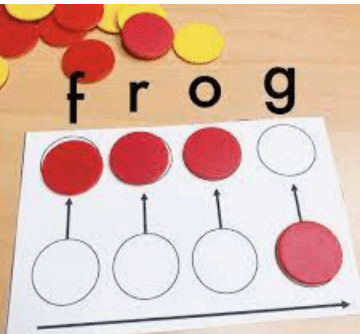
One thing I am trying out is Word Mapping. The technical term would be Grapheme Phoneme Mapping. You can use a form similar to this.

I ask students to repeat the target word after I say it. Then I ask them to tap it out on their fingers. They tap out words with 3-4 sounds on one hand by tapping a finger to their thumb for each sound heard in a word.

I ask how many sounds the word has, and then they write it. This is very similar to using Elkonon Boxes, often called Sound Boxes. When two or three letters represent one sound, they go in one box together. The word “see” above is an example of this.

When mapping words, you do not need to include words that follow a single pattern. Know your focus for the activity. Mapping words is an excellent way to review words or several patterns already taught.

Sunday Cummins and Jan Richardson have created a Mapping activity for high-frequency words. It has been added to the steps Richardson wrote about in her Next Step books. Click this link to find those books. This additional step is not in these books. Find it below. It was placed as step one, replacing What’s Missing as step one and moving it down to step two. The routine now has 5 steps.

Burkins & Yates (2021)

As you consider words with patterns for mapping, analogy charts, sorts, or other activities, keep in mind the students’ level of alphabetic knowledge. They are just not ready for some words, even when using analogies.


Also, understand that the sequence does matter when studying words. Do not overlook this. When building words, it is essential. You must make sure students attend to the feature you are working on. Understand that when it comes to working with words, the part of the word that we change or move when building words is the part students focus on. Therefore sequence matters! If working with vowel sounds, many teachers start with a list of short vowels and then move to long vowels. For example, they may ask them to read, write, or build this list of words: kit, bit, sit, kite, bit, site. This will cause the students to focus on what is changed, the initial consonant. Not the vowels. Sequence the words this way instead: kit, kite, bit, bite, sit, site. This focuses the student’s attention on how the e changes the vowel sound. You can do similar sequences for digraphs. Order matters.

Consider:

Words to build: kite, kit, bit, bite,hit, dim, dime, him

Words to read: dim, dime, time, tide, hid, hide

Words to write or map or use in an Analogy Chart: kite, kit, side, sit, site, dime, spit, spite

Children’s analysis of words is often very different than we realize. Don’t assume they notice, and note the same details in the words you expect them to. How they focus on words and what they see and hear depends on their current knowledge. We must observe and listen to them. When considering an activity, we must weigh its benefits against concerns. We cannot embrace an activity and assume it will work because it worked in a different setting with different students with their current level of knowledge. You can make those minor adjustments.


More to come on word sorts and analogy charts

Troy

The Front Porch

a community newsletter brought to you by the GRCC

KC LA

Kansas City Literacy Association

doctorsam7

Seeking Ways to Grow Proficient, Motivated, Lifelong Readers & Writers

Second Thoughts

Observations of a 2nd Grade Teacher

TWO WRITING TEACHERS

A meeting place for a world of reflective writers.

To Make a Prairie

A blog about reading, writing, teaching and the joys of a literate life

Pernille Ripp

Teacher. Author. Creator. Speaker. Mom.

sharpread

colbysharp@gmail.com

Crawling Out of the Classroom

In everything that my students and I do together, we strive to find ways to use reading and writing to make the world outside of our classroom a better place for all of us to be

sunday cummins

Experience Nonfiction

Reflect

Literacy